
Sunday, March 28, 2010

Fantasy: A Purple Crayon
{{Following is an essay I wrote for Stephanie Jansen's final capstone book, themed "Flights of Fancy." It doesn't have anything directly to do with inde study, but I'm posting it here in case anyone wants to take a look:}}
My first art instruction was given to me by my babysitter and involved step by step instructions on how to draw a princess. I would practice on my magna-doodle: circle for the head, a smaller circle on the side represented upswept hair, rectangle neck and arms, two circles for the pouffy princess sleeves, a rectangle ending in a point for the bodice, and a giant half circle skirt. From there I expanded my repertoire to religious figures: Jesus on the cross--complete with crown of thorns and pierced side--was a popular subject in my 6 to 8 year old work. I was allowed to draw in church and would give my latest masterpiece to the priest after mass every Sunday in return for hard candy...quite literally my first taste of the artist/patron relationship.
My interest in art gave the adults in my life an easy out on gift ideas. Birthdays without fail included newsprint sketchbooks and a never-ending stream of crumbly watercolor wafers. I lusted after scented magic markers in skinny white plastic casings, sharpened ebony pencils and the dusty curves of pink pearl erasers. At some point, I acquired a picture book called Harold and the Purple Crayon that quickly became one of my favorites. The story is simple and lovely. Harold has a purple crayon with which he draws the ‘reality’ around him: from pies to dragons to a boat for the ocean that he inadvertently draws himself into. I was drawn to Crocket Johnson’s spare illustrations and the softly expressive lines of his crayon-wielding protagonist. I’d almost forgotten about the book until recently when I Google image-searched “imagination” on a whim for this essay and a thumbnail of Harold popped up. Upon rereading the story, I noticed for the first time the other less obvious creative tool that Harold suggests to readers: fantasy.
Fantasy is a bit of a loaded word...its associations run the gamut from innocent daydreaming to Freudian fetishes. The word has an interesting etymology. It’s rooted in the Greek phantasia, which itself derived from verbs like phantazein (to make apparent; to appear) and phainein (to display; to show). In Sophist 264a, Plato describes phantasia as “a blend of perception and judgement.” Aristotle believed it played a key role in human movement and desire. The concept of fantasy has always been a significant theme in the arts...the ability to create something out of nothing would be impossible without it. Fantasy acts as a guide between perception and thought, between the concrete world around us and the world of the mind. Our ability to modify the world--to even imagine that there could be ‘a better way’--is dependent on our ability to fantasize.
Most of my imagination nowadays is taken up with dreaming of the future. I don’t dilly dally much with the past. I don’t have to since much of my past is still in recent memory and in the memories of the people around me...easily drummed up, easily recalled and detailed. When that fails, computers are on hand to recall my past in embarrassing detail: the first blog I started when I was 14, thousands upon thousands of digital pictures, emails from ex boyfriends, instant messages with ex best friends. etc.etc.etc. I don’t know whether this ad nauseam digital account of my life is good or bad, or how these types of accounts will change my generation’s relationship with the past, but the future certainly seems even more mysterious when the past is in such close reach. Whereas the past is cemented in all its digital reality, my fantasy future remains a perfect ideal where I can test all the possible directions various life paths might take.
For instance, in one fantasy I might strike up a conversation with someone in a coffee shop. I find out they work for a non-profit that deals with a social cause I’m interested in and we exchange business cards. I end up volunteering with them for a while and find my true calling. Maybe I end up going to law school after all, becoming a ballsy lawyer with a reputation for kicking ass and taking names. When not on the job, I travel a lot speaking to people about the cause and rallying support. Maybe I even run for office and get into politics. I’m able to push for reform from the front lines, making the world a bit better all while wearing fabulous 4-inch heels and a black pantsuit.
In another fantasy, I get married right away to a great guy. Maybe we have a baby. I freelance from home, slowly making a name for myself. In the meantime, my husband makes an irresistible indie film that ends up being a sensation. We move to a cozy house in Silver lake where I have a space over the garage that serves as my studio. I have super creative kids that work on their super awesomely brilliant kid projects while I work on my super awesomely brilliant graphic design adult work. I’m done with work every day by 4. Then I go to the grocery store, come home and make an amazing from-scratch experimental gourmet meal every night.
In other fantasies I go to grad school and get into education, teaching design while developing my own theories and projects. Or open a pastry shop and cafe where I get to bake all day. Or join peace corps. Or.........
Of course in my imagination, all of this is happening simultaneously. The domestic mommy me is also the front-lines fighting lawyer and the person getting her doctorate in some field of design that doesn’t even have a specific name yet. My fantasy world is a post-feminist heaven...where I can be superwoman and supermom and superwife all at the exact same time and still get 8 hours of sleep at night.
Fantasies are so important because simultaneous alternate realities are not allowed in the real world. In this world if I choose a path I might be stuck with it. Even when I can change direction after considerable effort, I certainly can not make it so that I never chose the original path. I can not literally undo something. But in my fantasy world I can be more reckless, less attuned to the constrictions of reality, and therefore much more wildly imaginative than I ever can be when faced with real world choices. Of course that’s not the end of the story. Fantasies allow us to imagine a better real world and then--as Aristotle suggested--creates the desire and movement to do something about it.
Harold is a good example of someone using his imagination in the moment, getting himself in and out of trouble and using his crayon to do so. There are overly obvious parallels to the life of ‘creatives,’ but the lessons really apply to anyone. I can’t draw myself into this perfect future world that I see for myself, but I can draw myself in and out of scenarios in my everyday life: making things a little more interesting, seeing where things could be better, and making necessary changes. Imagination is an agent for change, and therefore so is all design work. For that matter, so is any work that begins with fantasy.
My first art instruction was given to me by my babysitter and involved step by step instructions on how to draw a princess. I would practice on my magna-doodle: circle for the head, a smaller circle on the side represented upswept hair, rectangle neck and arms, two circles for the pouffy princess sleeves, a rectangle ending in a point for the bodice, and a giant half circle skirt. From there I expanded my repertoire to religious figures: Jesus on the cross--complete with crown of thorns and pierced side--was a popular subject in my 6 to 8 year old work. I was allowed to draw in church and would give my latest masterpiece to the priest after mass every Sunday in return for hard candy...quite literally my first taste of the artist/patron relationship.
My interest in art gave the adults in my life an easy out on gift ideas. Birthdays without fail included newsprint sketchbooks and a never-ending stream of crumbly watercolor wafers. I lusted after scented magic markers in skinny white plastic casings, sharpened ebony pencils and the dusty curves of pink pearl erasers. At some point, I acquired a picture book called Harold and the Purple Crayon that quickly became one of my favorites. The story is simple and lovely. Harold has a purple crayon with which he draws the ‘reality’ around him: from pies to dragons to a boat for the ocean that he inadvertently draws himself into. I was drawn to Crocket Johnson’s spare illustrations and the softly expressive lines of his crayon-wielding protagonist. I’d almost forgotten about the book until recently when I Google image-searched “imagination” on a whim for this essay and a thumbnail of Harold popped up. Upon rereading the story, I noticed for the first time the other less obvious creative tool that Harold suggests to readers: fantasy.
Fantasy is a bit of a loaded word...its associations run the gamut from innocent daydreaming to Freudian fetishes. The word has an interesting etymology. It’s rooted in the Greek phantasia, which itself derived from verbs like phantazein (to make apparent; to appear) and phainein (to display; to show). In Sophist 264a, Plato describes phantasia as “a blend of perception and judgement.” Aristotle believed it played a key role in human movement and desire. The concept of fantasy has always been a significant theme in the arts...the ability to create something out of nothing would be impossible without it. Fantasy acts as a guide between perception and thought, between the concrete world around us and the world of the mind. Our ability to modify the world--to even imagine that there could be ‘a better way’--is dependent on our ability to fantasize.
Most of my imagination nowadays is taken up with dreaming of the future. I don’t dilly dally much with the past. I don’t have to since much of my past is still in recent memory and in the memories of the people around me...easily drummed up, easily recalled and detailed. When that fails, computers are on hand to recall my past in embarrassing detail: the first blog I started when I was 14, thousands upon thousands of digital pictures, emails from ex boyfriends, instant messages with ex best friends. etc.etc.etc. I don’t know whether this ad nauseam digital account of my life is good or bad, or how these types of accounts will change my generation’s relationship with the past, but the future certainly seems even more mysterious when the past is in such close reach. Whereas the past is cemented in all its digital reality, my fantasy future remains a perfect ideal where I can test all the possible directions various life paths might take.
For instance, in one fantasy I might strike up a conversation with someone in a coffee shop. I find out they work for a non-profit that deals with a social cause I’m interested in and we exchange business cards. I end up volunteering with them for a while and find my true calling. Maybe I end up going to law school after all, becoming a ballsy lawyer with a reputation for kicking ass and taking names. When not on the job, I travel a lot speaking to people about the cause and rallying support. Maybe I even run for office and get into politics. I’m able to push for reform from the front lines, making the world a bit better all while wearing fabulous 4-inch heels and a black pantsuit.
In another fantasy, I get married right away to a great guy. Maybe we have a baby. I freelance from home, slowly making a name for myself. In the meantime, my husband makes an irresistible indie film that ends up being a sensation. We move to a cozy house in Silver lake where I have a space over the garage that serves as my studio. I have super creative kids that work on their super awesomely brilliant kid projects while I work on my super awesomely brilliant graphic design adult work. I’m done with work every day by 4. Then I go to the grocery store, come home and make an amazing from-scratch experimental gourmet meal every night.
In other fantasies I go to grad school and get into education, teaching design while developing my own theories and projects. Or open a pastry shop and cafe where I get to bake all day. Or join peace corps. Or.........
Of course in my imagination, all of this is happening simultaneously. The domestic mommy me is also the front-lines fighting lawyer and the person getting her doctorate in some field of design that doesn’t even have a specific name yet. My fantasy world is a post-feminist heaven...where I can be superwoman and supermom and superwife all at the exact same time and still get 8 hours of sleep at night.
Fantasies are so important because simultaneous alternate realities are not allowed in the real world. In this world if I choose a path I might be stuck with it. Even when I can change direction after considerable effort, I certainly can not make it so that I never chose the original path. I can not literally undo something. But in my fantasy world I can be more reckless, less attuned to the constrictions of reality, and therefore much more wildly imaginative than I ever can be when faced with real world choices. Of course that’s not the end of the story. Fantasies allow us to imagine a better real world and then--as Aristotle suggested--creates the desire and movement to do something about it.
Harold is a good example of someone using his imagination in the moment, getting himself in and out of trouble and using his crayon to do so. There are overly obvious parallels to the life of ‘creatives,’ but the lessons really apply to anyone. I can’t draw myself into this perfect future world that I see for myself, but I can draw myself in and out of scenarios in my everyday life: making things a little more interesting, seeing where things could be better, and making necessary changes. Imagination is an agent for change, and therefore so is all design work. For that matter, so is any work that begins with fantasy.
Wonky formatting...
For some really annoying reason all my posts are in bold now. Something is wonky with the formatting and it seems to have something to do with the text editor and not the css...Not sure how to fix it so for now, other than when I actually do purposefully bold something, it shows up regular. So if I bold what's meant to be normal and vice versa, the next post will look normal. But I don't have the time/energy to go back and do that to all the old posts, so I apologize for the annoying formatting!
Thursday, March 25, 2010
Reflections on Rectangles
Part I of "Visual and Verbal Literacy in New Media and the Role of the Designer"
draft I
After six years of undergraduate writing, I’m well acquainted with the ritual of opening a blank word document and struggling to fill it with something intelligent. Yet despite the fact that we’ve met often enough in literary combat, that blank white rectangle never fails to intimidate the heck out of me. There’s something about the proportions and the blinking text cursor that feels claustrophobic. Last week I was struggling to put pen to paper when I found myself thinking again how much easier it is to come up with a clear argument and train of thought when speaking out loud to another person in the world--unconfined. This got me thinking about how we write, the ritual of writing, and the mediums we use to hold our thoughts.
The first step that I always take when beginning a writing task is to open a document on screen or to take out a blank piece of paper. In either case, my writing is contained within the window of the page, screen, etc. This makes me wonder...what would windowless writing look like? Is it possible to imagine a new way of writing that is as containerless as speech? Why are our modes of input so limited...so unchanged for hundreds of years?
There are some clear benefits to having standard containers for writing. The physical and visual limitations might be freeing to some. As with any design problem, limitations are essential parts of defining and solving a problem. Perhaps these limitations actually free up the writing process. Perhaps the default means of displaying text and graphics also aids in the mass communication of messages. Perhaps mediums and sizes help people to focus on the content rather than the delivery. Certainly tasks like sending physical mail and printing on a large scale would be very difficult without some kind of standards for output of written communication.

However, we’ve been contained within these mediums for so long that I wonder whether anyone even considers that there might be another way. In following this train of thought, I’ve struggled to come up with an image of what truly containerless writing would look like. It’s difficult to imagine a world where history hasn’t brought us to a place of paper, windows, and ubiquitous rectangles. Certainly writing in the post-Gutenberg world has been limited by paper, and this has extended to our ways of writing on screen, despite the fact that the physical limitations of press, printing, paper, and the postal service no longer exist in the digital realm. These types of writing mediums also seem to privilege text heavily over image. Since most of the mediums came out of a verbal tradiiton, the mediums are not specifically created for images. Images are often placed into and formatted for these rectangular containers regardless of content and appropriateness.
When I first started thinking about the category of contained communication, I thought of writing on a screen, writing on a page, video chat, instant message, email, blogging, etc. Containerless communication would be talking on the phone or person to person in real life. I didn’t realize until after making the lists that I’d neatly put all the inherently visual communication I could immediately think of into the container category and the two most potentially non-visual into the containerless category. This isn’t really accurate. Phone conversations are also contained within a medium even if the medium isn’t a rectangular window of some sort. And there must be a way of working within the ‘contained’ mediums so that the text/image isn’t so limited by the parameters and syntax that we’ve become so accustomed to when writing in rectangular spaces.
But again, what would this look like? My first thought was the work of Stefan Sagmeister:

 He’s made a habit of working outside the box to great effect. But just working off screen and off page doesn’t really get to the heart of what I’m talking about.
I suppose the main issue is that we seem stuck with writing traditions that were developed in the 1400s. Surely it’s time to rethink or at least stretch our awareness of our means of writing and possible alternatives?
draft I
After six years of undergraduate writing, I’m well acquainted with the ritual of opening a blank word document and struggling to fill it with something intelligent. Yet despite the fact that we’ve met often enough in literary combat, that blank white rectangle never fails to intimidate the heck out of me. There’s something about the proportions and the blinking text cursor that feels claustrophobic. Last week I was struggling to put pen to paper when I found myself thinking again how much easier it is to come up with a clear argument and train of thought when speaking out loud to another person in the world--unconfined. This got me thinking about how we write, the ritual of writing, and the mediums we use to hold our thoughts.
The first step that I always take when beginning a writing task is to open a document on screen or to take out a blank piece of paper. In either case, my writing is contained within the window of the page, screen, etc. This makes me wonder...what would windowless writing look like? Is it possible to imagine a new way of writing that is as containerless as speech? Why are our modes of input so limited...so unchanged for hundreds of years?
There are some clear benefits to having standard containers for writing. The physical and visual limitations might be freeing to some. As with any design problem, limitations are essential parts of defining and solving a problem. Perhaps these limitations actually free up the writing process. Perhaps the default means of displaying text and graphics also aids in the mass communication of messages. Perhaps mediums and sizes help people to focus on the content rather than the delivery. Certainly tasks like sending physical mail and printing on a large scale would be very difficult without some kind of standards for output of written communication.

However, we’ve been contained within these mediums for so long that I wonder whether anyone even considers that there might be another way. In following this train of thought, I’ve struggled to come up with an image of what truly containerless writing would look like. It’s difficult to imagine a world where history hasn’t brought us to a place of paper, windows, and ubiquitous rectangles. Certainly writing in the post-Gutenberg world has been limited by paper, and this has extended to our ways of writing on screen, despite the fact that the physical limitations of press, printing, paper, and the postal service no longer exist in the digital realm. These types of writing mediums also seem to privilege text heavily over image. Since most of the mediums came out of a verbal tradiiton, the mediums are not specifically created for images. Images are often placed into and formatted for these rectangular containers regardless of content and appropriateness.
When I first started thinking about the category of contained communication, I thought of writing on a screen, writing on a page, video chat, instant message, email, blogging, etc. Containerless communication would be talking on the phone or person to person in real life. I didn’t realize until after making the lists that I’d neatly put all the inherently visual communication I could immediately think of into the container category and the two most potentially non-visual into the containerless category. This isn’t really accurate. Phone conversations are also contained within a medium even if the medium isn’t a rectangular window of some sort. And there must be a way of working within the ‘contained’ mediums so that the text/image isn’t so limited by the parameters and syntax that we’ve become so accustomed to when writing in rectangular spaces.
But again, what would this look like? My first thought was the work of Stefan Sagmeister:


I suppose the main issue is that we seem stuck with writing traditions that were developed in the 1400s. Surely it’s time to rethink or at least stretch our awareness of our means of writing and possible alternatives?
Wednesday, March 24, 2010
On Writing
[An unedited personal essay on the frustration of writing, which I wrote Feb. 17th and have been waiting to post until I ‘edited’ it...which is quite sad/laughable considering the theme of the essay...siiiiigh]
I paralyze myself with thinking “who’s going to read this, what are they going to think?”
I need to just write. I need to stop worrying about sounding clever or getting the right idiom or who’s going to think I sound smart or pretentious using this word. I need to just get it out of my head.
I’m paralyzed by past teachers who used to praise me for writing what they wanted. (which was generally middle of the road sentimental average sludge.) It was really well-written sludge, but it was boring and overly-sentimental as probably all middle school English teachers think a polite, smallish twelve year old should sound. I find myself wanting to find the moral in every story and wrap it all up in a nice little package. It’s hard not to censor myself as I write...to allow myself to write in an authentic meghan voice instead of the meghan I’ve concocted to please the writing audience I’ve imagined in my head...and the real one grading my papers in English classes.
I have to write as fast as I possibly can to avoid thinking myself into a bad place. I have to write faster than I can censor myself. It’s like the authentic meghan voice is racing against teacher-pet perfectionist meghan and if my hands can type fast enough, maybe authentic meghan can beat stupid-perfectionist meghan and then I can actually have something interesting to work with.
The feeling of “not knowing” is just generally uncomfortable for me...not that I don’t love it. I love finding a new topic to explore...but I feel this crazy uncomfortable pressure to learn about it as quickly as possible so I can start knowing how to talk about it and how I feel about it.
This effect probably comes out of my interest in politics and social justice and my stints on various debate teams. I was on three at the same time in high school: National Forensics League (has nothing to do with dead people...I don’t know why it’s called that), Harvard model congress, and Model UN. Girls are still in the minority on those teams, and I relished kicking the boys’ butts. My team used to practice for 6 hours every Sunday until we could make a sound argument in our sleep. But a side effect is that now making casual observations and feeling things out is really hard. My brain is wired to write in normative statements.
And right now that’s how I feel. Out of my element. It’s all new and fascinating territory. I feel this enormous amount of pressure to know EVERYTHING about the subjects I’ve laid out for myself...a feeling I’ve learned to kick to the curb in my other design projects (most of the time) but something I still struggle with in my writing courses. I have this desire to know everything there is to know about something before I begin so that I can make the absolute best piece of writing possible--especially if it’s a rhetorical piece. I want my arguments to be so tight that I’ve thought out every possible rebuttal and covered it. Of course this is an impossible and really annoying place to live in. Not to say that perfectionism doesn’t have its place. But it does NOT have a place in writing first drafts. It’s impossible to write a ‘perfect’ first draft and it’s impossible to know everything about something before I’ve explored it through writing/sketching/getting feedback about it. And this blog it supposed to be a place for me to explore topics and get feedback. So...I need to chill out and realize I’m not on debate team anymore. And also this is supposed to be fun. The biggest impediment to my own success is my own worry ABOUT that potential success and what other people will think about it/me after I put myself out there to be judged. Which is such a ridiculously juvenile thing for a 24-year old to worry about. So I need to chill out and stop worrying and just have fun with the material. As someone wise told me last year during a similar personal freakout, “If you have fun with the work, the outcome will take care of itself.”
I paralyze myself with thinking “who’s going to read this, what are they going to think?”
I need to just write. I need to stop worrying about sounding clever or getting the right idiom or who’s going to think I sound smart or pretentious using this word. I need to just get it out of my head.
I’m paralyzed by past teachers who used to praise me for writing what they wanted. (which was generally middle of the road sentimental average sludge.) It was really well-written sludge, but it was boring and overly-sentimental as probably all middle school English teachers think a polite, smallish twelve year old should sound. I find myself wanting to find the moral in every story and wrap it all up in a nice little package. It’s hard not to censor myself as I write...to allow myself to write in an authentic meghan voice instead of the meghan I’ve concocted to please the writing audience I’ve imagined in my head...and the real one grading my papers in English classes.
I have to write as fast as I possibly can to avoid thinking myself into a bad place. I have to write faster than I can censor myself. It’s like the authentic meghan voice is racing against teacher-pet perfectionist meghan and if my hands can type fast enough, maybe authentic meghan can beat stupid-perfectionist meghan and then I can actually have something interesting to work with.
The feeling of “not knowing” is just generally uncomfortable for me...not that I don’t love it. I love finding a new topic to explore...but I feel this crazy uncomfortable pressure to learn about it as quickly as possible so I can start knowing how to talk about it and how I feel about it.
This effect probably comes out of my interest in politics and social justice and my stints on various debate teams. I was on three at the same time in high school: National Forensics League (has nothing to do with dead people...I don’t know why it’s called that), Harvard model congress, and Model UN. Girls are still in the minority on those teams, and I relished kicking the boys’ butts. My team used to practice for 6 hours every Sunday until we could make a sound argument in our sleep. But a side effect is that now making casual observations and feeling things out is really hard. My brain is wired to write in normative statements.
And right now that’s how I feel. Out of my element. It’s all new and fascinating territory. I feel this enormous amount of pressure to know EVERYTHING about the subjects I’ve laid out for myself...a feeling I’ve learned to kick to the curb in my other design projects (most of the time) but something I still struggle with in my writing courses. I have this desire to know everything there is to know about something before I begin so that I can make the absolute best piece of writing possible--especially if it’s a rhetorical piece. I want my arguments to be so tight that I’ve thought out every possible rebuttal and covered it. Of course this is an impossible and really annoying place to live in. Not to say that perfectionism doesn’t have its place. But it does NOT have a place in writing first drafts. It’s impossible to write a ‘perfect’ first draft and it’s impossible to know everything about something before I’ve explored it through writing/sketching/getting feedback about it. And this blog it supposed to be a place for me to explore topics and get feedback. So...I need to chill out and realize I’m not on debate team anymore. And also this is supposed to be fun. The biggest impediment to my own success is my own worry ABOUT that potential success and what other people will think about it/me after I put myself out there to be judged. Which is such a ridiculously juvenile thing for a 24-year old to worry about. So I need to chill out and stop worrying and just have fun with the material. As someone wise told me last year during a similar personal freakout, “If you have fun with the work, the outcome will take care of itself.”
Sunday, February 28, 2010
3d stories
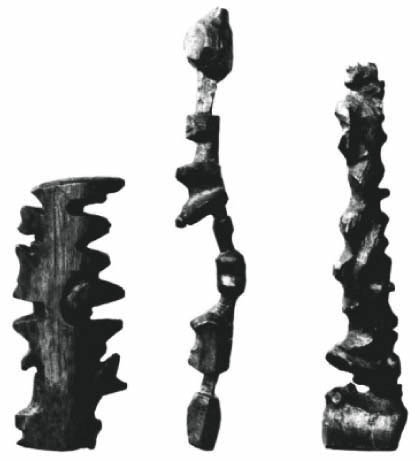
"Two years ago, Colleen Morgan of Middle Savagery pointed out these amazing tactile maps of the Inuit, '3D wood carvings of the East Greenland coastline, with the details of inlets and islands in sculptural relief. These could be employed by [travelers] at night in conjunction with the stars, feeling your way along the coastline, navigating at an intimate scale.'"
Link
What I Read Last Week: Part 2
Drawing on the Right Side of the Brain
by Betty Edwards
 When this book was referenced in Drawing in Writing (as quoted in the last post), I immediately pulled this book from the shelf behind me...I hadn't even thought to look at it in relation to the inde. study. My Pop-Pop bought this copy when it came out and I used to read it at my grandparents' house when I was little...it was probably the first 'drawing' book I ever read, although early on I mostly looked at the pictures and did the exercises. I love this groovy photo of Betty Edwards on the back:

Some passages I like (emphasis mine):
“As it turned out, my friend’s son always learned visual material best and fastest, a mode of learning consistently preferred by a certain number of students. Unfortunately, the school world is mainly a verbal, symbolic world, and learners like Gary must adjust, that is, put aside their best way of learning and learn the way the school decrees. My friend’s child, fortunately, was able to make this change, but how many other students are lost along the way?"
"This forced shift in learning style must be somewhat comparable to a forced change in handedness. it was a common practice in former times to make individuals who were naturally left-handed change over to right-handedness. In the future we may come to regard forcing children to change their natural learning modes with the same dismay that we now regard the idea of forcing a change in handedness. Soon we may be able to test children to determine their best learning styles and choose from a repertoire of teaching methods to insure that children learn both visually and verbally.” p196
Exercises in Visual Thinking
by Ralph E. Wileman
 This book has some fascinating stuff about designing intelligent, effective, and/or beautiful educational materials...but don’t necessarily have time to veer off on that tangent too far. I sort of accidentally fell into the educational tangent last week...which was really interesting. It's a sector that I hadn't even considered in my original outline.
I like this definition of visual literacy:
“Visual Literacy: The ability to ‘read’ and understand that which is seen and the ability to generate materials that have to be seen to be understood.”
The book also has lots of really fun illustrations of concepts.


by Betty Edwards


Some passages I like (emphasis mine):
“As it turned out, my friend’s son always learned visual material best and fastest, a mode of learning consistently preferred by a certain number of students. Unfortunately, the school world is mainly a verbal, symbolic world, and learners like Gary must adjust, that is, put aside their best way of learning and learn the way the school decrees. My friend’s child, fortunately, was able to make this change, but how many other students are lost along the way?"
"This forced shift in learning style must be somewhat comparable to a forced change in handedness. it was a common practice in former times to make individuals who were naturally left-handed change over to right-handedness. In the future we may come to regard forcing children to change their natural learning modes with the same dismay that we now regard the idea of forcing a change in handedness. Soon we may be able to test children to determine their best learning styles and choose from a repertoire of teaching methods to insure that children learn both visually and verbally.” p196
Exercises in Visual Thinking
by Ralph E. Wileman

I like this definition of visual literacy:
“Visual Literacy: The ability to ‘read’ and understand that which is seen and the ability to generate materials that have to be seen to be understood.”
The book also has lots of really fun illustrations of concepts.


What I Read Last Week: Part 1
This is the first of some long posts about books I read last week..just collecting lots of quotes and passages from a few books I read last week that I--sadly--have to return to the library :(
Drawing/Writing and the new literacy: Where verbal meets visual
By Susan Rich Sheridan

“The similes and metaphors routinely produced with each Drawing/Writing step as well as additional exercises with analogy, speculation, prediction and hypothesis train the bihemispheric brain to produce left/right, or verbal/visual messages where the combined information is what counts--not text, not image alone.”
“The slash between the words Drawing/Writing signals the following:
“The nickname for the CA (Composite Abstraction) is “the new hieroglyphics.” Egyptian hieroglyphics evolved form the pictorial to the phonetic; a picture of a vulture came to stand for the initial sound of the word “vulture.” In somewhat the same way, an optically accurate drawing changes its form in Drawing/Writing by becoming an abstraction, recapitulating the process of the invention of writing from drawing.”
“They know they can make marks that do not looks like an object but which describe it in new ways. They understand a very powerful idea: symbolic representation. The very young student who practices CA’s is ready to believe that the abstract drawings he has created are like writing. If his CA carries meaning, writing will carry meaning. it is at this point that the child can be introduced to the idea that mathematical notation-whether arithmetic, algebra or calculus--or, for that matter, musical notation, will be meaningful, just as abstract paintings will be meaningful.
The gulf between symbol systems is not as wide as we imagine. Children can draw their way toward mathematical operations.”
“On the other hand, children are born ready for symbol systems. Every representation children construct in their brains is an abstraction. Serious play with abstraction need not be withheld until a certain time or grade. Children demonstrate their readiness for meaningful-making through spontaneous scribbling and drawing. Serious work with abstract symbols can be achieved through the CA before children are able to write or read. This work is not only preparatory. It is legitimate work in and of itself."
"The ability to make and use visual symbols is as important as being able to make and use verbal symbols, and a lifetime of confidence in verbal symbols may--for some children--depend on it."
“Betty Edwards’ book, Drawing on the Right side of the Brain, helped to popularize brain science, providing practical applications of drawing which she took successfully into the worlds of education and business. She offered two important observations: Everyone can draw, Drawing is thinking.
The theories in this book expand an appreciation for drawing:
Training in drawing has general cognitive usefulness for teaching descriptive, analytical and inferential thinking skills. If training in drawing is combined with reflective writing, literacy becomes an integrative enterprise in which encoding and decoding skills extend well beyond words to all symbols including mathematics.
Drawing is no more an exclusively right-brained activity than writing is an exclusively left-brained activity. Both activities involve global mental operations including interhemispheric transfer.
With this understanding, polarizations like “logical versus illogical,” “creative versus critical,” or “intuitive versus rational” lose their power. Brain science blurs or even eliminates such distinctions. WholeBrain classrooms accept visual and verbal modes as equally viable approaches to learning and communication. ...Some brains will excel at visual thinking and some brains will excel at verbal thinking. WholeBrain teaching avoids lables like “right-brain thinking” or “left-brain thinking,” particularly as predictors of academic success. The goal in WholeBrain thinking is the growth of balanced, cooperative visual and verbal skills”
Right brain/Left brain is more like Moebius strip.
Drawing/Writing and the new literacy: Where verbal meets visual
By Susan Rich Sheridan

Here's a summary of what the book is about from the author's website:
"To an unprecedented degree, a technological society requires visual literacy skills as well as verbal. This combination of visual and verbal skills, or the ability to produce image as well as text, is "the new literacy." Children's natural drawing skills and their tendency toward a broad range of communicative marks is often marginalized or misunderstood. Technology's requirements for this new literacy forces us to take another look at spontaneous mark-making behavior - scribbling and drawing - in children, and to respect it and encourage mark-making as the place where this new literacy - in all its range and variety - begins. Dr. Sheridan's books meet this demand for multiple literacy skills by encouraging the natural capabilities of our brains, starting with the universal skill that everyone can do, drawing.
 The abilities to write and to read depend upon core skills including the ability to pay attention, to extract information, to communicate ideas and emotions clearly, and to use both words and images. In short, to use the whole brain. These skills can be learned through training in drawing. Drawing is a universal skill. Everyone can draw. No one teaches us how. Drawing is a language instinct. The abilities to write and to read depend upon core skills including the ability to pay attention, to extract information, to communicate ideas and emotions clearly, and to use both words and images. In short, to use the whole brain. These skills can be learned through training in drawing. Drawing is a universal skill. Everyone can draw. No one teaches us how. Drawing is a language instinct. When talking and writing accompany drawing, verbal skills grow and a double literacy develops, both visual and verbal. This “new literacy " is as old as paleolithic cave drawings and as new as computer technology. The New Literacy rests on a new theory of multiple literacies. Humans as language-users have one unique characteristic: they make marks of meaning. These marks first take the form of scribbles. Then, children draw. The marks are equipotential: they can become anything: drawing, writing, mathematics, musical notation. The number of systems for meaning-making each of us learns depends upon opportunity, encouragement and instruction. It depends on our parents, our teachers, our environment, and our culture. Ultimately, it depends upon our brains and how we choose to use them." |
“The similes and metaphors routinely produced with each Drawing/Writing step as well as additional exercises with analogy, speculation, prediction and hypothesis train the bihemispheric brain to produce left/right, or verbal/visual messages where the combined information is what counts--not text, not image alone.”
“The slash between the words Drawing/Writing signals the following:
- a cross-modal, or interhemispheric relationship exists between these two mental activities
- the relationship is integrative and transformative
- an exchange of information is occurring between two closely related mental enterprises
- the results are both more precise and richer than those in which these mental enterprises are pursued apart from each other”
 from the author's website: Teresa Mershon, CA, Rose Clippers
“The nickname for the CA (Composite Abstraction) is “the new hieroglyphics.” Egyptian hieroglyphics evolved form the pictorial to the phonetic; a picture of a vulture came to stand for the initial sound of the word “vulture.” In somewhat the same way, an optically accurate drawing changes its form in Drawing/Writing by becoming an abstraction, recapitulating the process of the invention of writing from drawing.”
“They know they can make marks that do not looks like an object but which describe it in new ways. They understand a very powerful idea: symbolic representation. The very young student who practices CA’s is ready to believe that the abstract drawings he has created are like writing. If his CA carries meaning, writing will carry meaning. it is at this point that the child can be introduced to the idea that mathematical notation-whether arithmetic, algebra or calculus--or, for that matter, musical notation, will be meaningful, just as abstract paintings will be meaningful.
The gulf between symbol systems is not as wide as we imagine. Children can draw their way toward mathematical operations.”
“On the other hand, children are born ready for symbol systems. Every representation children construct in their brains is an abstraction. Serious play with abstraction need not be withheld until a certain time or grade. Children demonstrate their readiness for meaningful-making through spontaneous scribbling and drawing. Serious work with abstract symbols can be achieved through the CA before children are able to write or read. This work is not only preparatory. It is legitimate work in and of itself."
"The ability to make and use visual symbols is as important as being able to make and use verbal symbols, and a lifetime of confidence in verbal symbols may--for some children--depend on it."
“Betty Edwards’ book, Drawing on the Right side of the Brain, helped to popularize brain science, providing practical applications of drawing which she took successfully into the worlds of education and business. She offered two important observations: Everyone can draw, Drawing is thinking.
The theories in this book expand an appreciation for drawing:
Training in drawing has general cognitive usefulness for teaching descriptive, analytical and inferential thinking skills. If training in drawing is combined with reflective writing, literacy becomes an integrative enterprise in which encoding and decoding skills extend well beyond words to all symbols including mathematics.
Drawing is no more an exclusively right-brained activity than writing is an exclusively left-brained activity. Both activities involve global mental operations including interhemispheric transfer.
With this understanding, polarizations like “logical versus illogical,” “creative versus critical,” or “intuitive versus rational” lose their power. Brain science blurs or even eliminates such distinctions. WholeBrain classrooms accept visual and verbal modes as equally viable approaches to learning and communication. ...Some brains will excel at visual thinking and some brains will excel at verbal thinking. WholeBrain teaching avoids lables like “right-brain thinking” or “left-brain thinking,” particularly as predictors of academic success. The goal in WholeBrain thinking is the growth of balanced, cooperative visual and verbal skills”
Right brain/Left brain is more like Moebius strip.
Catching Up

- Catch up on all my inde study stuff (working on it...be prepared for several posts to follow all at once from stuff I've been working on since last week)
- Catch up on capstone stuff
- Catch up on back labs in agricultural and resource economics (did that yesterday...anybody need me to do your taxes or explain that concept of a quasi-public good? I'm your woman)
- Polish the 3rd draft of the essay I'm writing for Stephanie for her capstone project (I may post the final draft up here for comments even though it's not directly related to inde study stuff)
- For Biomedical Ethics: Write a response essay to an argument about abortion that we're going to debate this week (eek)
- and obviously continue to keep the creative juices flowing at work for 20 hours a week (last week successfully designed and wrote copy for a logistics firm, designed some logos, and made a brochure that made pictures of exhaust tips and fuel tanks look sexy).
So now I'm sitting at Helios drinking a lovely chai and trying to pull all my notes and random saved passages together into something that holds together enough to post...but it's basically going to just be a brain dump, so here goes...
Monday, February 8, 2010


Design Practice
I’ve been taking writing courses for years, and one of the most common refrains from my professors has been to, “Just WRITE.” No one in my English major expects to become a good writer by writing papers for class every few weeks and reading a lot. You’ve got to practice. “Write something everyday.” We take this for granted.
This isn’t so true in my design major. We’re expected to work (all the time...that’s why there are couches in studio ;) ) but we’re not expected to practice per se...probably because it’s not immediately obvious to design students what that would even mean. Undergrad has taught me that the design process can offer solutions to particular problems and projects we’re assigned. Those of us who work professionally on the side experience essentially the same situation: a client calls us with a job, we accept it and begin the design process.
Since the impetus for designing is usually outside myself, it seems odd to even consider what ‘practicing’ design would even mean. Certainly it’s difficult to think of it in the same way I think of writing. In Bird By Bird, Anne Lamott describes waking up every morning at the same time to be at her desk and writing (at least attempting to write) by 9am. Writing practice is a daily ritual...it doesn’t wait for a client or an outsider problem.
I’ve heard other designers talk about working on self-initiated projects, but I get the feeling most of the time the ultimate aim of these projects is self-promotion or skills-polishing for the purpose of getting more paying work. There’s nothing wrong with that, but it’s not what I’m talking about. I’m talking about building practice into the process that way that writers are taught to do so...in sort of a ritualistic low-stakes sort of way. Some more thoughts by Anne Lamott:
Either way, I think building practice into the day apart from the typical problem-based design process could do nothing but help...it could keep me in the habit of MAKING and train my mind to get in the habit of thinking creatively outside of client-based work. It’s a nice practice to borrow from the writers.
This isn’t so true in my design major. We’re expected to work (all the time...that’s why there are couches in studio ;) ) but we’re not expected to practice per se...probably because it’s not immediately obvious to design students what that would even mean. Undergrad has taught me that the design process can offer solutions to particular problems and projects we’re assigned. Those of us who work professionally on the side experience essentially the same situation: a client calls us with a job, we accept it and begin the design process.
Since the impetus for designing is usually outside myself, it seems odd to even consider what ‘practicing’ design would even mean. Certainly it’s difficult to think of it in the same way I think of writing. In Bird By Bird, Anne Lamott describes waking up every morning at the same time to be at her desk and writing (at least attempting to write) by 9am. Writing practice is a daily ritual...it doesn’t wait for a client or an outsider problem.
I’ve heard other designers talk about working on self-initiated projects, but I get the feeling most of the time the ultimate aim of these projects is self-promotion or skills-polishing for the purpose of getting more paying work. There’s nothing wrong with that, but it’s not what I’m talking about. I’m talking about building practice into the process that way that writers are taught to do so...in sort of a ritualistic low-stakes sort of way. Some more thoughts by Anne Lamott:
“Writing taught my father to pay attention; my father in turn taught other people to pay attention and then to write down their thoughts and observations.”I’m still not sure what design practice might look like, although writing itself seems like a great place to start. Writing helps you “pay attention,” which is certainly vital for a good designer...and it also has a tendency to be fluid enough to allow for lateral connections to take place...something that’s difficult to achieve when you’re in the middle of a difficult design problem and you’re first undergraduate instinct is just to dig further and further into the subject at hand. Sometimes it’s helpful to meander away from the problem a bit. Drawing is similarly fluid...perhaps design practice might blend the two in an interesting way?
“I wrote a lot of other things too. I took notes on the people around me, in my town, in my family, in my memory. I took notes on my own state of mind, my grandiosity, the low self-esteem. I wrote down the funny stuff I overheard. I learned to be like a ship’s rat, veined ears trembling, and I learned to scribble it all down.”
Either way, I think building practice into the day apart from the typical problem-based design process could do nothing but help...it could keep me in the habit of MAKING and train my mind to get in the habit of thinking creatively outside of client-based work. It’s a nice practice to borrow from the writers.
Applied Arts
I know I shouldn’t rely on Wikipedia for definitions, but it usually works pretty well to get a general overview of a subject. However the following is a little disheartening:
This isn’t to whine about how graphic designers are pigeonholed into these sorts of definitions...rather to suggest that with a greater opportunity for agency, we should be acting more as authors and not just ‘applied artists.’ That means becoming intimately aware of the larger culture...of subjects besides design. We can’t effectively or responsibly shape culture if we only interface with ‘designy’ stuff. Writers don’t get to be good writers by only reading books about writing and talking to other writers. They have to have something that’s feeding the writing...the content. We’re not just commercial artists anymore...we shouldn’t be waiting for clients to feed us content...we should be finding it and making it on our own.
“Applied art is the application of design and aesthetics to objects of function and everyday use. Whereas fine arts serve as intellectual stimulation to the viewer or academic sensibilities, the applied arts incorporate design and creative ideals to objects of utility, such as a cup, magazine or decorative park bench...The field of graphic design [is] considered applied arts.”Ouch...“academic.” I’d like to think that the work I do can serve as intellectual stimulation...but it’s interesting to see this somewhat old-school oversimplification of graphic design. Graphic design is much more than just a utlititarian or commercial endeavor...designers are seen as shapers of culture...taking an active ‘authorial’ role even in cases where we are serving someone else’s vision. Our ability to work in the practical as well as theoretical just gives us an extra edge for getting our message out...be it academic or otherwise.
This isn’t to whine about how graphic designers are pigeonholed into these sorts of definitions...rather to suggest that with a greater opportunity for agency, we should be acting more as authors and not just ‘applied artists.’ That means becoming intimately aware of the larger culture...of subjects besides design. We can’t effectively or responsibly shape culture if we only interface with ‘designy’ stuff. Writers don’t get to be good writers by only reading books about writing and talking to other writers. They have to have something that’s feeding the writing...the content. We’re not just commercial artists anymore...we shouldn’t be waiting for clients to feed us content...we should be finding it and making it on our own.
Thursday, January 28, 2010
Space and Creativity

If I'm sitting in one spot for too long and am stuck on a problem, sometimes finding a solution is as simple as moving across the room to a different spot and trying it from there (it's amazing how often this works). I have no idea why process can have anything to do with physical space when the physical space doesn't have anything at all directly to do with the subject matter...perhaps the physical change in body position and visual information I'm taking in can somehow turn up new associations in my brain enough to wrangle my head around a difficult task.
I have a feeling I'm not unique in this, any thoughts from the anonymous readers?
also, i might just be weird.
Friday, January 22, 2010
Grad Symposium-Friday night
So I will not be posting tomorrow because I will be basking in the glow of designer awesomeness at the NC State College of Design Graduate Symposium. The theme of the weekend is Design, Community, and the Rhetoric of Authenticity, which is very apropos since I've been going through a series of mini identity crises as I prepare for graduation (What kind of job will I get? Will I find my niche in LA? Can I somehow merge my interests in sociology, literature, philosophy, ethics, social justice, AND design into some kind of schizophrenically awesome career? etc.etc.etc.) Suffice it to say I was really excited to hear what Brenda Laurel and Elliot Earls had to say at the kickoff tonight, and I'm even more excited to listen to the discussion tomorrow. I'm not going to process the discussion too much tonight bc I have to go to bed so I can wake up at 5:30 to be at the symposium by 6:15 to help set up food.
Before I forget, however, Elliot Earls mentioned something a few times that I thought was pretty interesting. (If I understood him correctly) it was that if you have something very particular to say in relation to some social agenda, then you might as well say it verbally and clearly rather than visually and 'hidden' or 'diluted' in some way. To just SAY what you mean instead of trying to communicate through a visual poster or something of the like. I thought it was interesting to hear a graphic designer say that words could somehow be more powerful or effective than strictly visual communication...I'm not sure how I feel about it but I thought it was an interesting point, especially from someone who has such a strong sense of visual rhetoric.
Anyway, fascinating stuff to come tomorrow. It's a huge treat to be surrounded by highly educated and super-cool people who are interested in the same kind of stuff I am. Hopefully I will absorb some of the brilliance!
Before I forget, however, Elliot Earls mentioned something a few times that I thought was pretty interesting. (If I understood him correctly) it was that if you have something very particular to say in relation to some social agenda, then you might as well say it verbally and clearly rather than visually and 'hidden' or 'diluted' in some way. To just SAY what you mean instead of trying to communicate through a visual poster or something of the like. I thought it was interesting to hear a graphic designer say that words could somehow be more powerful or effective than strictly visual communication...I'm not sure how I feel about it but I thought it was an interesting point, especially from someone who has such a strong sense of visual rhetoric.
Anyway, fascinating stuff to come tomorrow. It's a huge treat to be surrounded by highly educated and super-cool people who are interested in the same kind of stuff I am. Hopefully I will absorb some of the brilliance!
Thursday, January 21, 2010
Everyone as Author
Each week I'm focusing on a particular topic (see my syllabus at right for the breakdown), and this week my focus is on "The Designer as Author…" inspired of course by the infamous 1996 Michael Rock essay of the same name.
I reread The Designer as Author yesterday and a few things jumped out at me:
So what's the status of authorship now? Designers are originating messages but so is everyone else...we're in the age of user-generated content, open source technology, and wiki-everything. Self-publishing and amateur reporting (ala CNNs iReport). However even with UGC driven media, someone ultimately has to 'author' the interaction and moderate the content. And--in my experience--for all the lip service we give to user agency, we're quick to structure and limit the way non-designers can interact with our work. We're still pretty hesitant to give up the reigns and are offended when our expert message is altered.

One of the most inspiring examples of a designer's vision being altered (in a great way) by 'amateurs' is the case of the Mercy Corps logo. Steff Geissbuhler wrote this opinion piece on Brand New about how the identity system he designed for an aid organization has been applied in areas of the world where they don't have computers and could care less about a branding guide. Ultimately the important thing in the case of Mercy Corps is that people are able to find the help that they need and can recognize a legimitate aid organization as quickly as possible. It's important to mention that the designer foresaw this need all along, and designed the logo with the idea that users could and would alter it later (and the logo had to be applicable in situations where non-designers and non-computer users could still create the mark). In his own words:
I reread The Designer as Author yesterday and a few things jumped out at me:
"Authorship may suggest new approaches to the issue of the design process in a profession traditionally associated more with the communication rather than the origination of messages. But theories of authorship also serve as legitimizing strategies, and authorial aspirations may end up reinforcing certain conservative notions of design production and subjectivity--ideas that run counter to recent critical attempts to overthrow the perception of design as based on individual brilliance."It seems like a lot of sentiment expressed by designers comes from a place of insecurity, and I wonder if this is bred into the field due to our history of acting as 'decorators' for other peoples' ideas and our relative youth compared to other disciplines. It's interesting that Rock refers to authorship as giving legitimacy to designers...that certainly seems to be what happened in the era of design superstars. We went through our "I want to do it MYSELF!" phase and have emerged more mature and less histrionic about our role in the world (maybe?)
So what's the status of authorship now? Designers are originating messages but so is everyone else...we're in the age of user-generated content, open source technology, and wiki-everything. Self-publishing and amateur reporting (ala CNNs iReport). However even with UGC driven media, someone ultimately has to 'author' the interaction and moderate the content. And--in my experience--for all the lip service we give to user agency, we're quick to structure and limit the way non-designers can interact with our work. We're still pretty hesitant to give up the reigns and are offended when our expert message is altered.

One of the most inspiring examples of a designer's vision being altered (in a great way) by 'amateurs' is the case of the Mercy Corps logo. Steff Geissbuhler wrote this opinion piece on Brand New about how the identity system he designed for an aid organization has been applied in areas of the world where they don't have computers and could care less about a branding guide. Ultimately the important thing in the case of Mercy Corps is that people are able to find the help that they need and can recognize a legimitate aid organization as quickly as possible. It's important to mention that the designer foresaw this need all along, and designed the logo with the idea that users could and would alter it later (and the logo had to be applicable in situations where non-designers and non-computer users could still create the mark). In his own words:
As we often warn people in graphic standards guidelines in order to protect our precious logos from being bastardized with sentences like: “Do not reset, redraw, distort in any way …always use original art from master files…Do not reproduce from photocopies, etc.” Well, the good people of Mercy Corps violate all of these, and, if all you have is a brush and some black goo and no way to access or utilize digital files, you may be forced to reconstruct it based on someone’s business card, crude photocopy, or from memory.Perhaps the key for designers is to recognize that EVERYONE is a potential author, and to design accordingly.
I had to laugh when I saw some of the pictures from the “field.” It made me in a strange way happy to see obvious non-designers succeeding in copying the logo, in a different scale, on a piece of wood, cardboard, cloths or stone. Needless to say, it’s more important to be out there, in a vaguely recognizable way and saving lives, than being “correct.”
Tuesday, January 19, 2010
Introduction
In four short months I'll be receiving my degrees in Graphic Design and English: Language, Writing and Rhetoric. 'Eager' doesn't adequately describe my feelings about graduating (chomping at the bit, perhaps?), but there's still much to be done before I hang my diploma. In particular, I feel slightly anxious at how little I've integrated my two areas of study in the last six years. Though clearly complementary, my English and Design classes have always been pretty segregated. This has been frustrating at times, but I haven't been very proactive about the problem until now. For starters:
Reading is accepted as a vital part of the writing process, but what about its importance to a designer? And what of visual literacy to a writer? How have the two disciplines developed over time...where do they converge? How are the processes similar? Who is pushing the limits, challenging existing pedagogy and experimenting in text and image? What role do digital technologies play and how can I--the designer/writer--use them to best effect?
This independent study will provide an introduction into strategies of visual and verbal communication through analysis of historical and contemporary works in word and image, influential figures and pioneers in the field, and personal experimentation. I'll be maintaining this blog throughout. Hopefully it will be a canvas for experimentation, generation of essays, and a useful place to cull resources and document my process. I'll be meeting regularly with my design advisor, Denise Gonzales Crisp, and my writing advisor, Dr. David Covington. At the end of the semester I'll be curating content in book form and presenting to faculty (in some form or another…details t.b.d.)
For the record, comments, suggestions and critique are more than welcome. It's going to be a great final semester! Tata for now...
Reading is accepted as a vital part of the writing process, but what about its importance to a designer? And what of visual literacy to a writer? How have the two disciplines developed over time...where do they converge? How are the processes similar? Who is pushing the limits, challenging existing pedagogy and experimenting in text and image? What role do digital technologies play and how can I--the designer/writer--use them to best effect?
This independent study will provide an introduction into strategies of visual and verbal communication through analysis of historical and contemporary works in word and image, influential figures and pioneers in the field, and personal experimentation. I'll be maintaining this blog throughout. Hopefully it will be a canvas for experimentation, generation of essays, and a useful place to cull resources and document my process. I'll be meeting regularly with my design advisor, Denise Gonzales Crisp, and my writing advisor, Dr. David Covington. At the end of the semester I'll be curating content in book form and presenting to faculty (in some form or another…details t.b.d.)
For the record, comments, suggestions and critique are more than welcome. It's going to be a great final semester! Tata for now...
Saturday, January 9, 2010

Subscribe to:
Posts (Atom)